
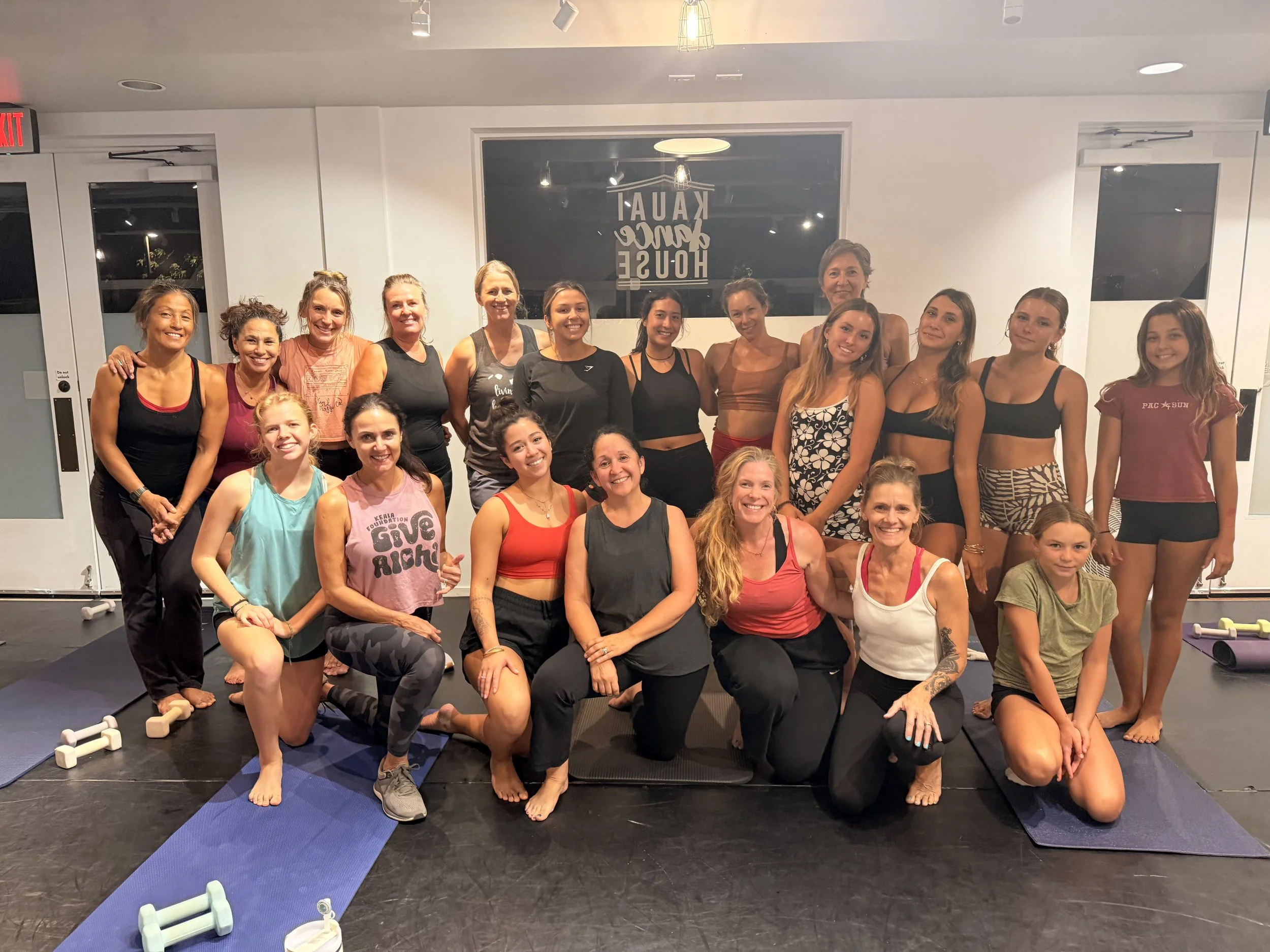
a group class to benefit a family and freind of mine in our community in need after Hurricane Lowell hit Kauai. An examole of movement for purpose.
Movement Is About So Much More Than Your Body!
After all these years of teaching fitness and dance, there's something I wish more people understood.
Movement isn't always about building muscle, losing weight, burning calories, or improving performance. Sometimes, it's simply about feeling BETTER!
And yes, there's a difference!
When we move for our mental and emotional wellness, the goal isn't necessarily to change how our body looks or performs. It's to support how we FEEL in our bodies and minds.
And the benefits? Oh, there are SO many!
Movement can:
Reduce stress and anxiety. Sometimes getting up, moving around, and giving your brain a break is exactly what you need.
Boost your mood and energy. Movement helps support the brain's feel-good chemistry and can leave you feeling more alive!
Help you feel connected. Dance classes, group fitness, walking with a friend, or moving together can create connection and help combat loneliness.
Improve focus and productivity. Movement supports memory, attention, and our ability to think clearly. Yes, taking a movement break can actually HELP you get things done!
Support long-term brain health. Physical activity encourages the release of substances that support brain function, learning, and the formation of new neural connections.
Support emotional regulation. Movement can help us manage stress, work through difficult emotions, and feel more grounded.
Movement for Mental Health: What Does the Research Tell Us?
Here's something I loved learning more about during my NASM Wellness Coach studies.
Different types of movement, at different intensities, can support different aspects of mental health.
And no, I'm not suggesting we can exercise our way out of every mental health challenge! Movement isn't a cure-all or a replacement for professional care, but it can be one more useful tool in our wellness toolbox.
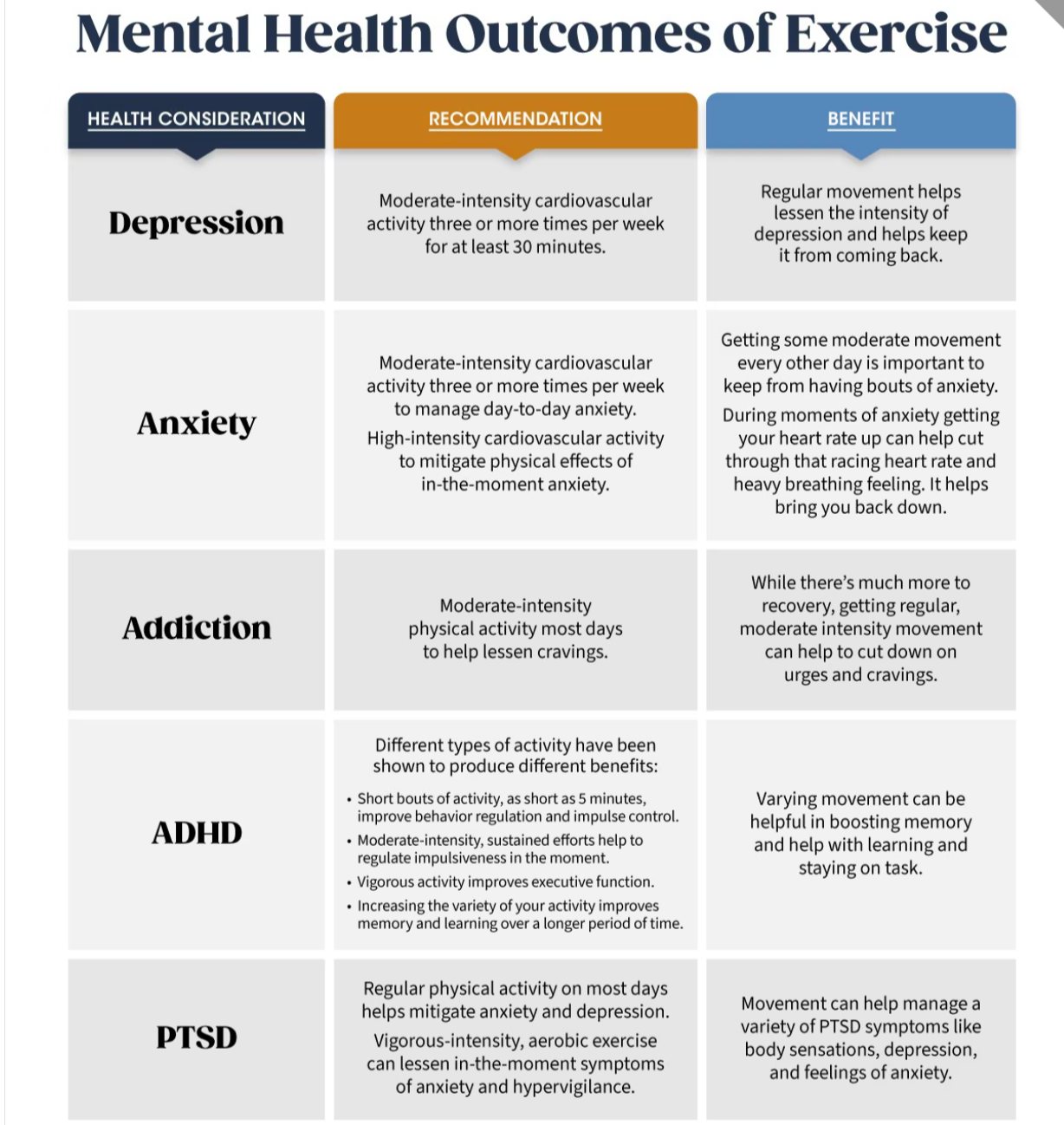
Here are some of the recommendations covered in my studies.
Depression
Research supports moderate-intensity cardiovascular activity for at least 30 minutes, three or more times per weekto help reduce depressive symptoms and the risk of depression returning.
Think brisk walking, cycling, swimming, or dancing. Something that gets your heart rate up but still allows you to carry on a conversation.
Consistency matters here!
Anxiety
This one is interesting because different intensities can serve different purposes.
For everyday anxiety: Moderate-intensity cardiovascular activity three or more times per week can help manage ongoing anxiety.
For anxiety in the moment: Higher-intensity cardiovascular activity may help some people manage the physical sensations associated with anxiety.
But remember, what feels supportive to one person might not feel good to another. If a fast heart rate makes your anxiety worse, going harder isn't necessarily the answer.
Finding movement that works for YOUR body and nervous system is what matters.
Addiction Recovery
Moderate-intensity physical activity on most days may help lessen cravings and support recovery.
Movement can also create healthy routines, provide a positive outlet for stress, and offer opportunities for social connection.
And I think this is important: find something you genuinely enjoy!
The goal isn't to add another obligation. It's to find something supportive that you actually want to keep doing.
ADHD
Movement can be particularly helpful for attention, focus, and self-regulation.
The NASM recommendations highlight several interesting findings:
Just five minutes of activity may help improve behavior regulation and impulse control.
Sustained moderate-intensity activity can help with managing impulsivity in the moment.
Vigorous physical activity can support executive function, including planning, attention, and decision-making.
A variety of movement activities may help support memory and learning over time.
So that quick movement break between tasks? It might be doing more good than you realize!
PTSD
Regular physical activity on most days may help ease associated symptoms of anxiety and depression.
Some research also suggests that vigorous aerobic activity can reduce anxiety and hypervigilance in the moment.
However, with PTSD, it's especially important to choose activities that feel safe and supportive. Movement should be adapted to the individual, ideally with guidance from a qualified healthcare professional when needed.
The big takeaway? There isn't one perfect workout for every mental health need. Different activities can support us in different ways, and the goal is to find movement that feels helpful, enjoyable, and sustainable.
Group Activity, Nature & Movement With Purpose
And as if the mental and emotional benefits of movement weren't impressive enough, there are ways to make the experience even MORE meaningful!
Here are three of my favorites.
🌿 1. Take Your Movement Outside!
Nature and movement? YES, PLEASE!
Walking on the beach, hiking, swimming in the ocean, gardening, or simply stretching in your backyard.
Physical activity in natural environments can offer additional benefits for mood, stress reduction, and our sense of well-being.
You don't have to climb a mountain. Sometimes a 15-minute walk outside is just what your mind needs.
💛 2. Move With Other People!
This is something I've witnessed firsthand throughout my decades of teaching dance and group fitness.
The connection that happens when people move together is pretty special!
Think about it. Group fitness classes, dance classes, walking groups, recreational sports teams, or simply meeting a friend for a workout. I have taught group fitness classes since 1993. The familiar and new faces, the talking story before and after class, the friendships that spark. It’s continuously so beautiful to witness and be a part of.
Moving together can:
Create opportunities for friendship and connection.
Build a sense of belonging and community.
Increase motivation and enjoyment.
Help reduce feelings of loneliness and isolation.
Encourage us to show up for ourselves AND each other.
And sometimes the most valuable part of class isn't the workout itself. It's the laughter, friendships, and feeling of being part of something.
✨ 3. Move With Purpose!
Here's another way to make movement even more meaningful: connect it to something bigger than yourself.
Participate in a charity walk, join a fundraising fitness event, sign up for a community challenge, or organize a group activity that supports a local cause.
When we combine movement with purpose, we're not just supporting our physical and mental wellness. We're connecting with our communities and contributing to something meaningful.
And I LOVE that!
My Wellness Reminder for You
You don't always need a workout. Sometimes you just need to MOVE!
Take a walk. Dance around your kitchen. Stretch on the floor. Go for a swim. Meet a friend for a class. Join a community event.
It doesn't always have to be structured, intense, or even particularly long.
And please, stop thinking movement only counts if you're sweating, tracking calories, or checking off a workout!
Movement is one of the many ways we take care of ourselves — physically, mentally, emotionally, and socially.
And that, my friends, is wellness. 💛
Educational reference: NASM Wellness Coaching curriculum, Chapter 8, Movement for Mental and Emotional Well-Being, Lesson 3, Recommendations for Movement for Mental Health. Physical activity can complement, but should not replace, individualized mental health treatment.